
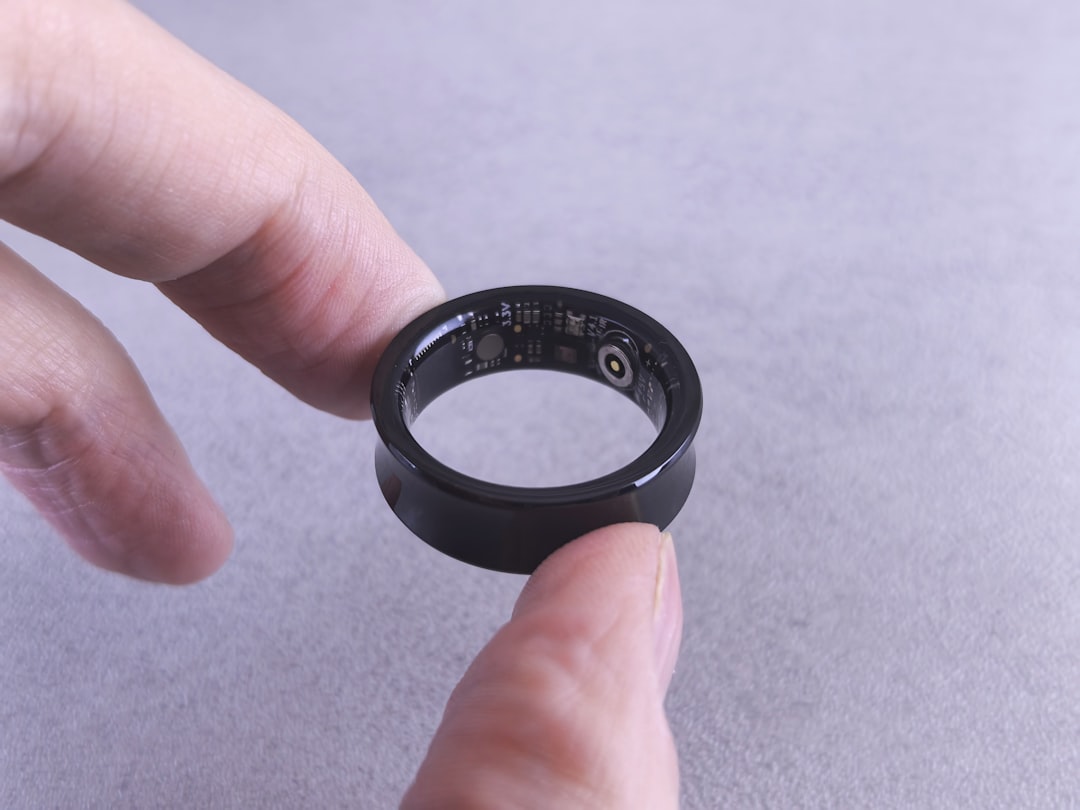
If you own a smartwatch and you're serious about sleep data, there's a good chance you're stuck in one of two situations. Either you're wearing something bulky enough to wake you up every time you roll over, or you're leaving the watch on the charger overnight and waking up with nothing to show for eight hours. Neither is great.
This year, a quieter category has been picking up momentum: screenless sleep trackers. No display, no notifications buzzing at 2am, just continuous health monitoring from something small enough that you forget it's on.
The Oura Ring has been the poster child for this approach for a few years. But in 2026, it finally has real company.
Ten Nights of Real Sleep Data: Garmin Cirqa vs Oura Ring 5
The Garmin Cirqa launched in July 2026 at $199. No display, one button for starting and stopping workouts, and up to 10-11 days of battery life. Garmin is pitching it squarely against the Whoop 5.0 and the Fitbit Air. The Oura Ring 5 starts at $399, plus a $5.99 monthly subscription. The Cirqa is a one-time purchase with no ongoing fees.
Tom's Guide wore both devices simultaneously for 10 nights and shared the raw data. What came out of it was genuinely interesting. Both trackers agreed on the big picture most nights: when sleep was rough, both said so. When it was solid, both confirmed it. But the specific numbers often drifted apart. On one night, the Cirqa logged 7 hours 32 minutes and gave it an 89/100, while the Oura Ring logged 6 hours 57 minutes and scored it 84/100. Same night, same person, different story.
This is actually normal for consumer sleep trackers, and it doesn't mean either device is broken. They use different sensors, different algorithms, and different definitions of sleep stages. The more useful takeaway is that both were comfortable enough to actually stay on all night, and that's the real unlock with screenless devices. If you sleep in them, the data is there every morning. If you don't, it isn't.
Why Consistent Wear Matters More Than Perfect Accuracy
Here's the thing that often gets missed in these comparisons. The value of sleep tracking isn't in any single night's number. It's in the pattern over weeks. Did your deep sleep tank this week? Is your recovery score trending down? Are you getting less REM than usual since you changed your schedule?
You can't spot any of that if there are gaps in your data. And gaps happen when your tracker is uncomfortable, needs charging every night, or lights up like a phone screen when you move.
The Oura Ring 5 weighs next to nothing. The Garmin Cirqa's stretch wristband is reportedly lighter than the Fitbit Air. Both are designed to be ignored, which means they actually get worn. And consistent wear, even with imperfect algorithms, gives you better data than a technically superior device you only use half the time.
The Bracelet That Thinks It's Jewellery
On the more experimental end of this category sits the Lumysi, a screenless fitness bracelet currently on Kickstarter that's solving a slightly different problem: what you actually want to wear to dinner.
Lumysi is built from hypoallergenic titanium, comes in finishes like Gold, Rose, Midnight Black and Silver Space, and sits flat on the wrist rather than sitting up from it. From a few feet away it reads as a bracelet, not a tracker. Band options include stainless steel, leather and silicone depending on the occasion.
Under the surface it's doing the usual work. A PPG sensor array with green, red and infrared LEDs handles heart rate, HRV and blood oxygen. A skin temperature sensor tracks your thermal baseline. An accelerometer logs movement, steps and sleep, with data refreshing every 30 seconds. Battery life is claimed at 7 days, via a portable charging case. Everything goes to a companion app that adds AI-generated explanations on top, turning the numbers into plain-language guidance on whether to push hard or rest.
It's a crowdfunding project, so the standard caution applies: you're backing a promise, not buying a finished and reviewed product. But the direction it represents is real. People want the data without the device being the first thing anyone notices on your wrist.
So Which One Actually Makes Sense to Buy?
If you want the most mature sleep tracking platform available right now, the Oura Ring 5 is the obvious answer. Years of software refinement, a genuinely good app experience, and a form factor that genuinely disappears. The subscription cost adds up over time, but it's a well-established product with a track record.
If you're already in the Garmin ecosystem and you want something screenless, the Cirqa is worth a serious look. No subscription, solid battery, and your data lands inside Garmin Connect alongside everything else. It's slightly larger than a ring but still comfortable overnight.
If aesthetics matter as much as the tracking: keep an eye on Lumysi, but give it time to get through independent testing before committing.
The broader shift is clear regardless of which device you're considering. In 2026, wearable makers are making a bet that the future of health tracking isn't a brighter screen. It's something small enough that you stop thinking about it.
That's probably the right bet.
Frequently Asked Questions
Is a smart ring better than a smartwatch for sleep tracking?
For most people who want consistent sleep data, yes. Smart rings and screenless trackers are lighter, more comfortable overnight, and don't need daily charging. The result is that you actually wear them to bed, which matters more than marginal differences in sensor accuracy.
Do I need to pay a subscription for sleep tracking?
It depends on the device. The Oura Ring 5 requires a $5.99 monthly subscription for full app access. The Garmin Cirqa has no subscription fee. Devices like the Lumysi bracelet are pitching themselves as one-time purchase options too, though subscription-free doesn't always mean the data experience is as polished.
How accurate are screenless sleep trackers?
Accurate enough to be useful, but not medical-grade. Consumer devices like the Oura Ring 5 and Garmin Cirqa can diverge on specific sleep stage timings even when worn simultaneously. They're most valuable for spotting trends over weeks rather than interpreting any single night's data as definitive.
What is the difference between the Garmin Cirqa and the Oura Ring 5?
The Cirqa is a wristband at $199 with no subscription and up to 11 days of battery. The Oura Ring 5 is a finger ring starting at $399 plus $5.99 per month, with up to 9 days of battery. The ring is more discreet. The Cirqa fits into the Garmin Connect ecosystem. Both track sleep without a screen.
Can I wear a screenless fitness tracker in the shower or swimming?
Most mainstream options are designed for it. Both the Garmin Cirqa and Oura Ring 5 are water resistant and meant to stay on all day, including showers and workouts. The Lumysi bracelet lists 5 ATM water resistance. Always check the specific rating for the device you're buying, but keeping the tracker on 24/7 is the point.
How long does the Oura Ring 5 battery last?
The Oura Ring 5 lasts around 8 to 9 days between charges, depending on your ring size. The Garmin Cirqa lasts 10 to 11 days. Both are long enough that you're not thinking about charging every night, which is one of the main advantages over a standard smartwatch.