
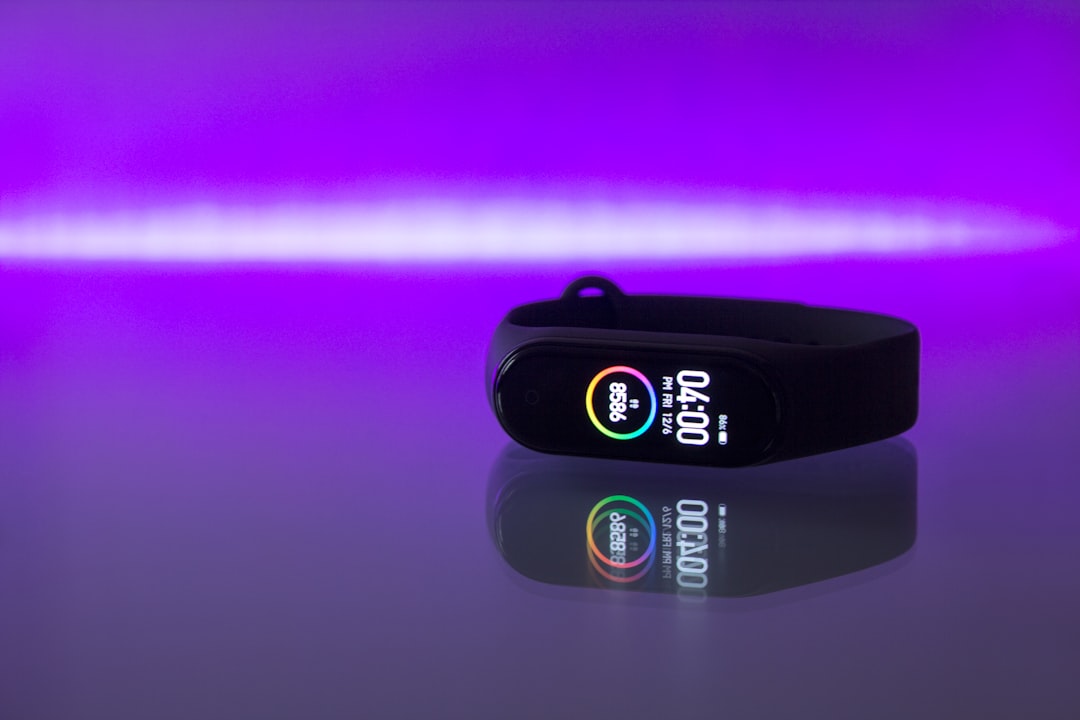
Something interesting has happened in the fitness tracker market this year. After years of manufacturers competing to pack brighter, bigger displays onto your wrist, a counter-movement has taken hold. The screenless tracker is no longer a niche product. It's becoming the default choice for people who are serious about health data and tired of their wrist buzzing at them all day.
The Tom's Guide breakdown of four major screenless devices put it plainly: 2026 is the year of the screenless tracker. Garmin has the Cirqa. Google/Fitbit launched the Air. Whoop released the 5.0. Oura dropped the Ring 5. And budget brand Rogbid just introduced the Loop V, a $70 band with ECG, optical PPG, and a Bosch six-axis accelerometer packed into an aluminium body with no display in sight.
The reason these devices are resonating isn't complicated. A screen invites distraction. Without one, your tracker becomes genuinely passive. It collects data without pulling your attention toward it. You check your metrics when you decide to, not every time a notification lands. For people trying to reduce screen time without abandoning health tracking, this is a meaningful difference.
What Is Actually on the Market Right Now
The range here is wider than most people realise, and price is not the only axis that matters.
At the budget end, the Rogbid Loop V comes in at $70 with no subscription required. It reads heart rate via optical PPG, records ECG, tracks body temperature, four-stage sleep data, and menstrual cycles. Battery life is up to 10 days in standard use. The body is aluminium with a nylon strap and 3 ATM water resistance. For $70 with no monthly fees, that is a genuinely capable device.
The Fitbit Air sits at $99. Some of its better features, including Gemini AI coaching and advanced sleep tracking, require a $9.99/month subscription. But even without paying extra, you get solid core tracking. It is the most accessible mainstream option in this category right now.
The Garmin Cirqa is $199 and arguably the best value in the mid-range. Garmin gives you full access to your health and fitness data under the free tier. Connect+ adds nutrition plans and coaching for an optional $6.99/month, but nothing critical is gated. Not many wearable brands can say that anymore.
The Whoop 5.0 is technically free to buy, but the subscription starts at $199 a year and goes up from there depending on the tier you choose. If you are fully invested in the Whoop ecosystem and the strain-and-recovery model resonates with you, that might be worth it. But factor the cost in upfront rather than discovering it afterward.
Finally, the Oura Ring 5 starts at $399 plus $5.99/month. The ring form factor is genuinely different from a band. It is lighter, smaller, and far more discreet. The Men's Health review noted consistent eight-to-nine day battery life and a design 40 percent smaller than the previous generation. The main trade-off is that ring-based tracking is less detailed for exercise metrics compared to wrist-worn devices.
The Question Nobody Asks Before Buying One
Here is the more honest thing to think about before choosing a tracker.
A study of 2,000 adults found that 57% of people now wear some kind of health-monitoring tech, but 23% admit they don't understand most of what their device is showing them. 60% had looked at data on their device without knowing what it meant. A quarter have simply ignored health alerts from their device entirely.
That is a significant problem. Heart rate variability, SpO2, sleep stage breakdowns, skin temperature trends. These are useful signals, but only if you know what to do with them. Dr Neil Srinivasan, a consultant cardiologist, warned that ignoring wearable alerts could indicate serious health issues, particularly ones linked to the heart. And yet most people ignore them because the data looks like noise.
This gap between data and action is also part of why apps like Ren are emerging. Josh Hou, who left investment banking at Evercore to co-found the app, watched wearables circulate all over Wall Street. Whoops, Apple Watches, Oura Rings. Most people wore them and kept grinding through 80-hour weeks treating poor health scores as background noise. Ren's approach is to help users run structured experiments on their own bodies, tracking how specific interventions are actually affecting their data over time. The device is easy. Understanding what to do about what it tells you is harder.
So Which One Makes Sense for You
It really comes down to what you want to spend and how you plan to use the data.
If you want the least amount of financial commitment and no ongoing fees, the Rogbid Loop V is worth considering. The app ecosystem is not going to match Garmin or Fitbit, but the sensor hardware is capable and the price is hard to argue with.
If you want a mainstream device with a strong app and the option to pay for more features later, the Fitbit Air at $99 is the easy recommendation. The Garmin Cirqa is the better pick if you are a serious runner or cyclist who wants full data access without being pushed toward a subscription.
If the ring form factor appeals to you and you are comfortable with the price, the Oura Ring 5 is a meaningful step up from previous generations. The battery life improvements alone make it more practical as a daily device.
And if you find yourself staring at a HRV score or an SpO2 reading with no idea what it means, spend some time learning the basics before deciding which tracker to buy. All of these devices are now good enough that the limiting factor is usually not the hardware. It is whether you know what to do with the information.
Frequently Asked Questions
Do screenless fitness trackers still measure the same health metrics as ones with screens?
Yes. Most screenless trackers include heart rate, SpO2, sleep tracking, skin temperature, and accelerometer data. Some, like the Rogbid Loop V, also include ECG. The absence of a screen does not reduce sensor capability. It just means you check your data through the companion app on your phone rather than glancing at your wrist.
Is the Oura Ring 5 worth $399 plus a subscription?
If you want a discreet, comfortable passive tracker with strong sleep and recovery data, the Ring 5 is a genuine improvement over previous generations. It is 40 percent smaller than gen 4, with consistent eight-to-nine day battery life. The main limitation is that ring-based activity tracking is less detailed than wrist-based alternatives. The monthly subscription adds to the total cost of ownership, so it is worth thinking through before committing.
Do I need to pay a subscription fee to use a fitness tracker?
Not necessarily. The Rogbid Loop V and Garmin Cirqa both offer strong tracking without a required subscription. The Fitbit Air and Oura Ring have optional subscriptions that unlock better features. Whoop's model requires a subscription regardless, so you are always paying monthly if you use that device.
What does HRV actually mean on a fitness tracker?
Heart rate variability measures the variation in time between individual heartbeats. Higher HRV generally indicates better recovery and cardiovascular health. It is one of the more useful long-term metrics for understanding how your body is responding to training or stress, but it needs weeks of consistent measurement to become meaningful. A single low reading on a stressful day tells you less than a trend over time.
Why do so many people not understand what their tracker is telling them?
A study of 2,000 adults found nearly a quarter of wearable users don't understand most of the data their device shows them. Trackers surface a lot of metrics including HRV, SpO2, respiratory rate, and sleep stages, without always explaining what is significant or what action to take. Starting with one or two metrics that are relevant to a specific health goal tends to work better than trying to interpret everything at once.
Are screenless trackers good for sleep tracking?
Yes, and often more practical than display-based smartwatches for overnight tracking. Screenless trackers tend to have longer battery life and a slimmer, more comfortable form factor for sleeping. The Oura Ring 5, Fitbit Air, and Rogbid Loop V all offer detailed sleep stage tracking. The ring form factor in particular is designed with overnight wear in mind and has built much of its reputation specifically on sleep data.