
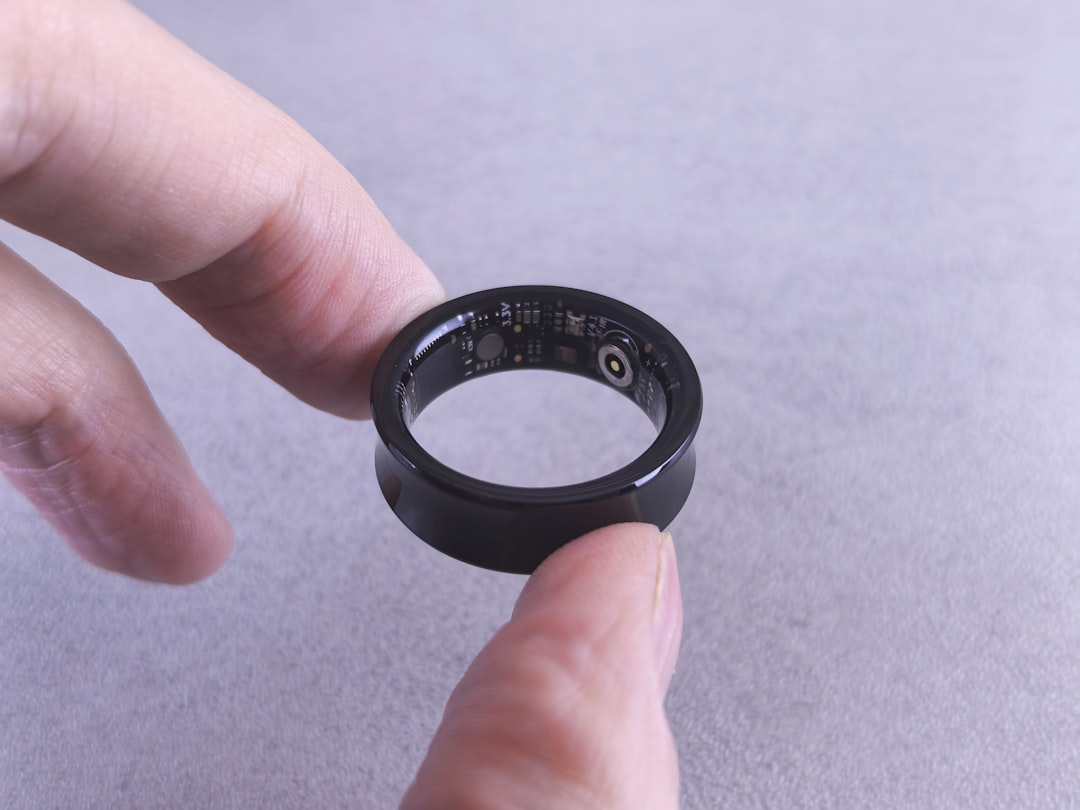
I used to be one of those people who rolled their eyes at fitness trackers. Another gadget, another app, another thing to charge. Then I started paying attention to what people who actually wear the Oura Ring say about it. Not the press releases. Not the sponsored posts. The people who forget it's even on their finger.
That's the thing about the Oura Ring 5. The whole pitch is that you stop thinking about it.
The Design Change Nobody Predicted Would Matter This Much
Here's what's actually new with the Ring 5: it's thinner. That's mostly it. But that turns out to be the one change that shifts the experience.
The band is now 6.09mm wide, down from 7.90mm on the Ring 4. The thickness dropped from 2.88mm to 2.28mm. The lightest size weighs just 2 grams. These are small numbers, but on your finger, you feel them. Or rather, you stop feeling the ring at all.
For anyone who tried the Ring 4 and thought it looked a bit chunky on their hand, the Ring 5 is a different conversation. Reviewers who've worn it for a month describe it as looking like regular jewelry, something that sits alongside other rings without drawing attention. Women's Health tested it for a full month and called it the first fitness tracker they didn't want to take off. That's not a small thing.
The exterior is scratch-resistant titanium. It's waterproof. You can sleep in it, shower in it, and run in it. The one activity it doesn't love is heavy lifting, purely because gripping metal weights puts pressure on the ring that could mark the finish. That's a fair limitation for what it is.
What It Actually Tracks
The Oura Ring 5 is a lifestyle tracker, not a workout tracker. That distinction matters.
It does sleep really well. Heart rate, HRV, skin temperature, respiratory rate, sleep stages, sleep debt, readiness score. The app bundles all of this into something readable without making you feel like a patient reading a chart. If your sleep score is low, it doesn't alarm you. It says you might want to take it easy. That framing is more useful than a number that makes you anxious.
The readiness score is the feature people tend to find most valuable over time. It's an aggregate of how recovered you are, based on the previous night's sleep and your recent activity load. Knowing whether today is a day to push or a day to coast changes how you plan things, quietly.
Activity tracking has improved in recent versions, and the Ring 5 carries that forward. The list of trackable activities is longer than it used to be, and it handles things like runs and walks reasonably well. But if you're training for a race or want live heart rate zone data on your wrist while you run, you'll still want something else. The ring has no screen. You look at your phone for live data, which works fine for a walk and less well when you're mid-effort on a track.
A side-by-side test comparing the Oura Ring 5 with the Samsung Galaxy Watch Ultra 2 and the new Fitbit Air on a 40-minute walk makes this clear. The smartwatch wins on live feedback. The ring wins on everything else.
The No-Screen Question
This is the fork in the road for most people deciding between a smart ring and a smartwatch.
If you want to glance at your wrist during a run and see your heart rate zone, the Oura Ring is not your device. A Galaxy Watch or a Garmin does that better. The ring is for people who want their health data summarised once a day in a way they can actually act on, not streamed at them in real time.
There's an argument that the screenless approach is actually the point. You're not checking your stats every few minutes. You're living your life, and the ring is quietly gathering data, and in the morning you get a clear picture of how you recovered. That's a different relationship with health data, and for a lot of people it's a healthier one.
Battery Life and the Subscription
The Ring 5 gets six to nine days per charge, depending on use. People who've tested it report charging it three or four times a month, which matches Oura's estimates. The ring warns you when you have about 20 hours of battery left, which gives you plenty of runway to get to a charger. Charging to full takes an hour or two.
One thing worth being clear about before you buy: the ring costs $399, but that's not the whole cost. There's also a subscription of $6 per month or $70 per year for full access to the insights and features. That's $469 in year one minimum, and $70 every year after. Whether that feels reasonable depends on how much you actually use the data.
If you're someone who checks the app every day, makes decisions based on your readiness score, and finds the sleep tracking genuinely useful, $70 a year is not hard to justify. If you think you might use it for two months and forget about it, that changes the maths.
Who This Ring Is Actually For
The Oura Ring 5 works best for people who want health awareness without the friction of a smartwatch. It's for people who find sleep data motivating rather than stressful. It suits anyone who's already wearing rings and wants technology that disappears into the jewellery.
It's not the best choice if you're a serious athlete who needs real-time performance data during workouts. It's also not ideal if you hate subscriptions on principle.
But if you've been curious about smart rings and were put off by how bulky earlier versions looked, the Ring 5 is worth a proper look. The slimmer design closes the gap between tech gadget and everyday accessory in a way that the Ring 4 never quite managed.
If you already own a Ring 4 and it's working for you, the upgrade case isn't dramatic. The Ring 5 looks better and feels lighter, but the tracking capability is largely the same. If you're coming in new, or the bulk of the Ring 4 was always a sticking point, the Ring 5 is the one to get.
One practical note: Oura recommends using their free sizing kit before ordering, because the Ring 5 sizing runs differently from the Ring 4. Don't assume your Ring 4 size translates.
Frequently Asked Questions
Is the Oura Ring 5 worth upgrading from the Ring 4?
If the Ring 4 is working well for you, the core tracking hasn't changed much. The Ring 5 is thinner, lighter, and looks more like regular jewellery. If the bulk of the Ring 4 bothered you, or you want that low-profile look, it's worth it. If you're already happy with your Ring 4, you can hold off.
How accurate is the Oura Ring 5 for sleep tracking?
Oura's sleep tracking is one of the stronger offerings in the smart ring category, covering sleep stages, HRV, respiratory rate, and skin temperature. The data is not clinical-grade, but it's consistent and useful for spotting trends over time. Most users find the readiness and sleep debt features more actionable than raw numbers.
Does the Oura Ring 5 have a screen?
No. The Oura Ring 5 has no screen. All data is viewed in the Oura app on your phone. This is intentional to the design, keeping the ring slim and focused on passive tracking rather than live feedback.
What is the Oura Ring 5 subscription and is it required?
Yes, a subscription is required to access the full range of insights. It costs $6 per month or $70 per year. Without it, you have limited access to your data. Factor this into the total cost: $399 for the ring plus $70 per year ongoing.
Can you wear the Oura Ring 5 at the gym?
You can wear it for most activities, including running and swimming, as it is waterproof. Heavy lifting is the main exception, as gripping weights puts pressure on the ring that could scratch the titanium exterior. Most people who lift take it off during that part of their workout.
How does the Oura Ring 5 compare to a smartwatch for fitness tracking?
A smartwatch shows live data on your wrist during exercise, which is useful for active training with heart rate zones or GPS pace. The Oura Ring is better for passive, all-day tracking and sleep monitoring. If your priority is workout performance data in real time, a smartwatch wins. If you want daily health awareness with less friction, the ring is the better fit.