
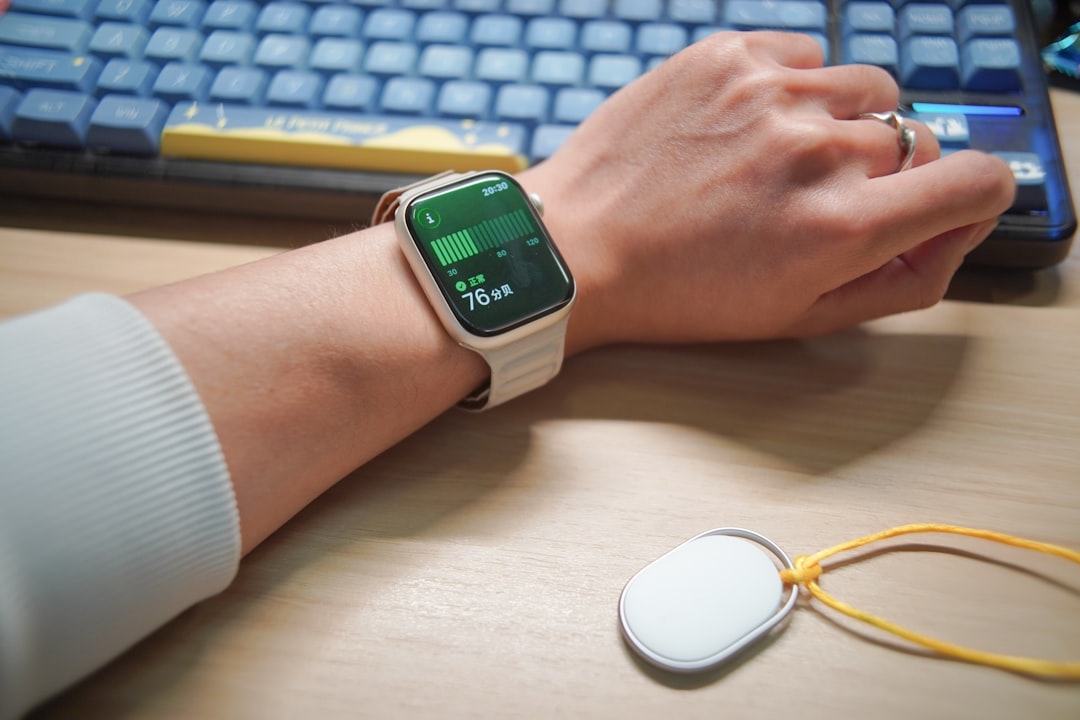
The step counter era is over. What you're wearing on your wrist or finger right now has much bigger ambitions than you might think.
The Race Nobody Told You About
The wearables industry is locked in a battle that looks like a product war on the surface but is something far larger underneath. Apple, Samsung, Oura, Google — they're all moving in the same direction. Not toward better step counts or shinier displays, but toward the medical system.
Look at what's happened in the last couple of years:
Apple partnered with Epic Systems, the dominant healthcare data platform used by hospitals across the US
Oura paired with Dexcom, a continuous glucose monitor maker, which invested $75 million into the ring company in 2024
Samsung acquired Xealth, a platform that pipes consumer health data directly into hospital systems
Google launched Google Health, combining Fitbit data with your actual health records in one place
These aren't product features. These are strategic bets on owning a piece of future healthcare infrastructure.
As Jitesh Ubrani, an analyst with IDC, put it: the end goal is to be part of the medical ecosystem. It's a very lucrative market if every hospital and doctor recommends one of these devices.
Why "Fitness Tracker" Has Become the Wrong Label
Oura's CEO Tom Hale doesn't call his product a fitness wearable. He calls it a health intelligence platform. That might sound like marketing spin, but the distinction is real.
A fitness tracker tells you how many calories you burned. A health intelligence platform monitors your body continuously, looks for anomalies, and ideally surfaces something to your physician before a problem becomes a crisis.
That's a completely different product category. And it's where the whole industry is pointing.
The patent wars make a lot more sense in this light. Oura has sued seven competitors over patent infringement and won against three, with four cases still pending. Apple Watch is caught up in at least two patent lawsuits. Nobody fights this hard over a step counter. You fight this hard when you believe you're building the infrastructure for the future of medicine.
What This Means for You Right Now
Here's where it gets personal. If this vision plays out, wearables won't just be a tool you use for motivation — they'll be a tool your doctor relies on.
The potential is genuine. Runners tracking their heart metrics with wearables are already catching warning signs that a ten-minute annual checkup would miss. Continuous monitoring means patterns become visible over days and weeks that would otherwise go unnoticed until something goes wrong.
The catch is the data privacy question, and it's a big one. Your heart rate variability, sleep patterns, and blood pressure trends paint an intimate picture of your life. Who owns that data, who can access it, and what they can do with it — regulation hasn't fully caught up with those questions yet.
There's also the accuracy question. The technology is reliable enough for some medical contexts already, but experts are careful to say wearables augment care rather than replace it. Your wearable can raise a flag. A doctor still needs to interpret what that flag means.
Two Very Different Consumer Bets Running at the Same Time
Watching this space, I notice two very different things happening in parallel.
On one side: the push toward more. More sensors, more data points, more integration with healthcare systems. Smart scales now track over 50 body composition metrics using electrode sensors on both hands and feet. Smart rings monitor your body overnight with data a watch on your wrist can't easily capture. The underlying belief is that more data, properly interpreted, leads to better health outcomes.
On the other side: a quiet backlash. Timex just launched the Retroware Digital — a watch with no GPS, no heart rate sensor, no smartphone notifications, no charging cable. It tells you the time, has a countdown timer, lights up in the dark, and looks great. That's it. And people are genuinely interested in it.
That tension is worth taking seriously. Not everyone wants a medical device on their wrist. Some people find that endless data loop — sleep scores, recovery readiness, HRV trends, training load — creates anxiety rather than insight. Data is only useful if you know what to do with it.
Where This Is All Going
The longer-term vision floating around the industry is a small implanted device that continuously monitors everything and flags issues to your doctor in real time. Whether that arrives in ten years or twenty-five is genuinely hard to say. But the direction of travel is clear.
The near-term reality is more grounded: wearables that actually talk to your healthcare provider's systems, AI that helps make sense of the noise in your biometric data, and a gradual shift in how preventive care works. Less "see a doctor when something feels wrong," more "your wearable noticed something three weeks before you felt anything."
How you feel about that probably depends on where you think the line between consumer gadget and medical device should sit.
But that line is moving, whether we draw it or not. Whether you're wearing a smart ring, a full-featured smartwatch, or a watch that simply tells you the time — the industry betting your health data is the most valuable thing on your wrist isn't slowing down.
Frequently Asked Questions
Are health wearables accurate enough to replace doctor visits?
Not yet, and they aren't designed to. The technology is reliable enough to complement medical care — tracking patterns over days and weeks that a short appointment would miss — but wearables are meant to inform clinical decisions, not replace them. Experts at institutions like the Mayo Clinic are consistent on this point: wearable data is most valuable when a clinician interprets it.
What is the difference between a fitness tracker and a health wearable?
A fitness tracker counts steps, active minutes, and calories. A health wearable monitors biometrics continuously — heart rate variability, blood oxygen, skin temperature, sleep stages — and is increasingly built to share that data with healthcare providers. The line between the two is blurring fast, which is exactly why companies like Oura have stopped using the word fitness to describe their products.
Is my health data from wearables private and secure?
This is one of the most important questions the industry hasn't fully answered. Wearables collect intimate biometric data around the clock. Major companies have privacy policies, but the regulatory framework around health data collected by consumer devices is still catching up. It's worth reading the data terms of any device you use carefully, and being thoughtful about which third-party apps you connect it to.
Why is there so much patent litigation in the wearables space right now?
Because the stakes are enormous. If wearables become standard components of the healthcare system, the company whose technology underpins that integration wins access to one of the most lucrative markets in the world. This isn't typical tech industry squabbling. It's companies trying to own the foundation of a future healthcare platform, and the urgency of that explains the aggressiveness of the lawsuits.
Should I buy a smart ring or a smartwatch for health monitoring?
It depends on what you want from it. Smart rings tend to offer more discreet, comfortable all-day and all-night monitoring, which makes them particularly good for sleep tracking and recovery data. Smartwatches give you a screen, GPS, and more active workout features. If continuous health monitoring is your priority, a ring is worth considering. If activity tracking and on-wrist navigation matter to you, a watch makes more sense.
What if I don't want a wearable tracking my health data at all?
That is a completely valid position. The assumption that more data always leads to better outcomes doesn't hold for everyone. Some people find continuous monitoring creates more anxiety than clarity. If that sounds like you, a straightforward watch that tells the time is a perfectly reasonable choice. Technology should serve you, not create another thing you have to manage.